Honeywell’s FocusPRO 6000 series‚ specifically the TH6220D1028 model‚ offers programmable comfort and energy savings. This thermostat boasts a built-in‚ simple pull-out instruction manual.
It’s designed for ease of use‚ featuring adaptive recovery and filter change reminders‚ ensuring optimal HVAC system performance. The TH6220D1028 provides reliable temperature control.
This thermostat is a popular choice for residential heating and cooling systems‚ offering both manual and auto changeover options‚ configurable via installer setup.
Overview of the TH6220D1028 Model
The Honeywell TH6220D1028 is a programmable thermostat within the FocusPRO 6000 series‚ designed for straightforward installation and user operation. Its white color and dimensions of 3-9/16 inches high by 5-13/16 inches wide make it a standard fit for most walls.
This model provides both manual and automatic changeover control‚ allowing users to select between heat‚ cool‚ auto‚ or off modes. The installer setup‚ specifically Function 12 (System Setting)‚ determines whether the changeover operates manually or automatically.
A key feature is the integrated‚ pull-out instruction manual‚ simplifying initial setup and troubleshooting. The thermostat supports adaptive recovery functionality‚ optimizing comfort by quickly returning to the set temperature after a setback. It also includes a filter change reminder‚ promoting consistent HVAC system efficiency.
The TH6220D1028 is designed to be compatible with a wide range of 24V heating and cooling systems‚ offering a versatile solution for residential climate control. It prioritizes simplicity and reliability‚ making it a favored choice for both homeowners and installers.
Key Features and Benefits
The Honeywell TH6220D1028 thermostat delivers significant benefits‚ starting with its user-friendly design and integrated instruction manual. This simplifies installation and programming for both professionals and DIY enthusiasts.
Key features include programmable temperature schedules‚ allowing customized comfort and energy savings. Adaptive recovery ensures quick temperature restoration after setbacks‚ enhancing comfort levels. The filter change reminder promotes optimal HVAC system performance and longevity.
The thermostat’s compatibility with various 24V systems offers installation flexibility. Manual and auto changeover options provide tailored control over heating and cooling. Backlight settings and display customization enhance usability in diverse lighting conditions.
Furthermore‚ the TH6220D1028 prioritizes energy efficiency‚ helping reduce utility bills. Its reliable operation and durable construction ensure long-term performance. The FocusPRO series is known for its simplicity – what you see is what you get‚ offering straightforward comfort and control.
Installation Guide
Proper installation of the TH6220D1028 requires careful attention to safety precautions and a thorough understanding of the wiring diagram. Always consult the full installation manual.
Safety Precautions Before Installation
Prior to commencing any installation work on the Honeywell TH6220D1028 thermostat‚ it is absolutely crucial to disconnect power to your HVAC system at the breaker panel. Failure to do so presents a significant risk of electrical shock or damage to equipment.
Always verify the system is completely de-energized using a non-contact voltage tester before handling any wiring. If you are uncomfortable working with electrical systems‚ it is strongly recommended to enlist the services of a qualified HVAC technician.
Review the complete installation manual thoroughly to understand all safety warnings and instructions. Be mindful of potential hazards associated with working around heating and cooling components. Protect your eyes with safety glasses and wear appropriate gloves.
Ensure the installation location is dry and free from obstructions. Do not install the thermostat in areas exposed to direct sunlight‚ extreme temperatures‚ or excessive moisture. Following these precautions will help ensure a safe and successful installation.
Tools Required for Installation
Successfully installing the Honeywell TH6220D1028 thermostat requires a few essential tools. A small flathead screwdriver is necessary for terminal block connections and adjustments. A Phillips head screwdriver will be needed for mounting the thermostat base to the wall.
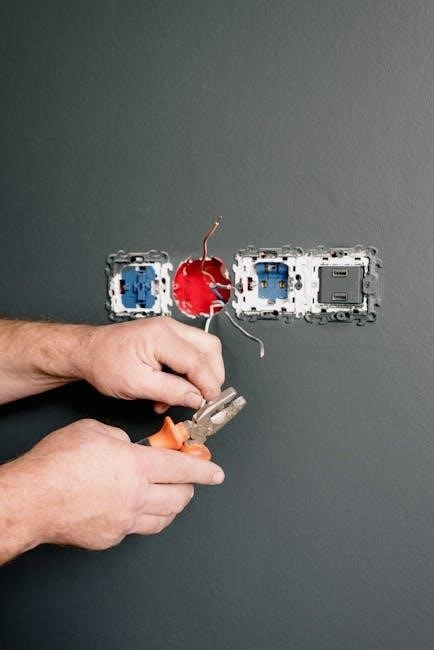
A non-contact voltage tester is vital for confirming the power is safely disconnected before working with wiring. Wire strippers are essential for preparing the thermostat wires for connection. Pliers can be helpful for bending or manipulating wires.
A level ensures the thermostat is mounted straight for accurate readings and a professional appearance. A pencil is useful for marking screw locations on the wall. Finally‚ access to the full installation manual is crucial for referencing wiring diagrams and detailed instructions throughout the process.
Having these tools readily available will streamline the installation and minimize potential delays. Remember to prioritize safety and consult the manual if unsure about any step.
Wiring Diagram Explanation
The Honeywell TH6220D1028 utilizes a standard color-coded wiring system. Typically‚ ‘R’ designates 24VAC power‚ while ‘C’ is the common wire‚ essential for consistent power. ‘W’ controls heating‚ ‘Y’ cooling‚ and ‘G’ activates the fan. Understanding these designations is crucial.
The installer manual provides detailed wiring diagrams for various HVAC system configurations‚ including conventional‚ heat pump‚ and multi-stage systems. Carefully match your existing wiring to the diagram before making any connections. Incorrect wiring can damage the thermostat or HVAC equipment.
Pay close attention to the ‘O/B’ terminal‚ which controls reversing valves in heat pump systems. Its function depends on the system setting configured during initial setup. The diagram clearly illustrates how to connect auxiliary heat (AUX) and emergency heat (E) if applicable.
Always double-check all connections against the diagram and the manual before restoring power. A thorough understanding of the wiring diagram ensures a safe and functional installation.
Connecting the Thermostat to Your HVAC System
Before connecting the TH6220D1028‚ ensure the HVAC system’s power is completely shut off at the breaker. Refer to the wiring diagram in the installer manual to identify each wire’s function – R‚ C‚ W‚ Y‚ and G are key. Carefully disconnect the wires from your old thermostat‚ labeling each one if necessary.
Connect each wire to the corresponding terminal on the thermostat base. Ensure wires are securely fastened to prevent loose connections. The ‘C’ wire‚ often blue‚ is vital for consistent power; its absence can cause operational issues. Double-check all connections against the wiring diagram.
For heat pump systems‚ verify the correct configuration of the ‘O/B’ terminal based on your system type. Incorrect configuration can lead to improper heating or cooling. Once all wires are connected‚ gently push any excess wire back into the wall opening.
Proceed with caution and consult a qualified HVAC technician if you are unsure about any part of the connection process.
Mounting the Thermostat Base
Prior to mounting‚ verify the chosen location is free from direct sunlight‚ drafts‚ and other temperature-influencing factors. Using the provided mounting screws‚ position the thermostat base on the wall‚ ensuring it’s level for accurate temperature readings. The installer manual details proper screw placement.
Utilize a drill if necessary‚ creating pilot holes to simplify screw insertion and prevent wall damage. Securely fasten the base to the wall‚ ensuring it sits flush and doesn’t wobble. Improper mounting can affect the thermostat’s performance and longevity.
For existing thermostat wiring‚ carefully feed the wires through the opening in the base. Avoid pinching or damaging the wires during this process. Ensure sufficient wire length remains accessible for connection to the thermostat display.
Confirm the base is firmly attached before proceeding to the next step. A stable base is crucial for proper thermostat operation and a clean aesthetic.
Attaching the Thermostat Display
Gently align the thermostat display with the mounted base. The installer manual illustrates the correct orientation‚ ensuring a secure and flush fit. A slight pressure should be sufficient to snap the display into place; avoid forcing it.
Verify that the display is firmly connected to the base‚ with no gaps or misalignment. A secure connection is vital for proper functionality and prevents accidental dislodgement. Check for a clear and stable visual interface.
Once attached‚ carefully inspect the wiring connections‚ ensuring all wires are properly seated and secured within their respective terminals. Loose connections can lead to inaccurate readings or system malfunctions.
Finally‚ grasp and gently pull on the display to confirm it’s securely locked onto the base. This simple test ensures a reliable connection‚ providing peace of mind and optimal thermostat performance.
Initial Setup and Programming
After installation‚ power on the TH6220D1028. Configure the initial settings‚ including date‚ time‚ and system type (heat‚ cool‚ or auto) for optimal performance.
Powering On and Initial Configuration
Upon completing the physical installation and wiring connections‚ the Honeywell TH6220D1028 thermostat will initiate its power-up sequence. The display should illuminate‚ presenting the Honeywell logo and then transitioning to the initial configuration screen. If the display remains blank‚ verify the wiring connections and ensure adequate power supply to the HVAC system.
The initial configuration process guides the user through essential settings. First‚ the thermostat prompts for the current date and time. Accurate timekeeping is crucial for proper scheduling functionality. Next‚ the system type must be defined – selecting between heating only‚ cooling only‚ or a combined heat and cool (auto) system. This selection dictates how the thermostat controls your HVAC equipment.
The thermostat’s intuitive interface utilizes a simple navigation system. Users can typically scroll through options using the up and down arrow buttons and confirm selections with the ‘Select’ or ‘Enter’ button. Pay close attention to on-screen prompts to ensure correct configuration. Incorrect settings can lead to suboptimal performance or system malfunctions.
Setting the Date and Time
After powering on the Honeywell TH6220D1028‚ the first crucial step in initial configuration is accurately setting the date and time. The thermostat displays separate fields for month‚ day‚ and year‚ navigated using the up and down arrow buttons. Confirm each selection by pressing the ‘Select’ or ‘Enter’ button to proceed.
Following date input‚ the thermostat prompts for time setting. This involves adjusting the hour and minute‚ again utilizing the arrow buttons for incrementing or decrementing values. Ensure you correctly identify AM or PM to avoid time discrepancies. Accurate timekeeping is fundamental for the thermostat’s scheduling features to function as intended.
The TH6220D1028’s interface is designed for simplicity. If an incorrect value is entered‚ simply navigate back to the respective field and adjust it accordingly. Once both date and time are confirmed‚ the thermostat will proceed to the next configuration step – system type selection. Double-check the displayed date and time before proceeding to ensure accuracy.
System Type Configuration (Heat/Cool/Auto)
Following date and time setup‚ the Honeywell TH6220D1028 requires configuration of the system type. This defines how the thermostat interacts with your HVAC equipment. The options presented are typically Heat‚ Cool‚ and Auto. Selecting ‘Heat’ configures the thermostat for heating-only systems‚ activating the furnace when the temperature drops below the setpoint.
‘Cool’ mode is for cooling-only systems‚ initiating the air conditioner when the temperature exceeds the setpoint. The ‘Auto’ setting allows the thermostat to intelligently switch between heating and cooling to maintain the desired temperature‚ based on indoor and outdoor conditions.
The installer setup‚ specifically Function 12‚ allows for selection between manual and auto changeover. Choosing the correct system type is vital for proper operation. Incorrect selection can lead to inefficient performance or the HVAC system not functioning correctly. Confirm your system’s configuration before proceeding.
Programming Temperature Schedules
The Honeywell TH6220D1028 thermostat allows for customized temperature schedules to optimize comfort and energy savings. Programming involves setting different temperatures for various times of the day and days of the week. The thermostat typically offers four programmable periods: Wake‚ Leave‚ Return‚ and Sleep.
Within each period‚ you can define a specific temperature setpoint. For example‚ a lower temperature can be set for ‘Sleep’ to conserve energy while you are asleep‚ and a warmer temperature for ‘Wake’ to ensure comfort upon waking. The thermostat’s intuitive interface simplifies this process.
Carefully consider your daily routine when creating schedules. Utilizing the programmable features effectively can significantly reduce energy consumption and lower utility bills. Remember to review and adjust schedules seasonally to accommodate changing weather conditions and personal preferences.
Understanding the Operating Modes
The Honeywell TH6220D1028 thermostat offers several operating modes to suit different needs. ‘Heat’ mode activates the heating system to maintain the set temperature. ‘Cool’ mode activates the cooling system‚ providing air conditioning. ‘Auto’ mode intelligently switches between heating and cooling to maintain the desired temperature‚ based on indoor and outdoor conditions.
An ‘Off’ mode disables both heating and cooling. The thermostat also features a ‘Fan’ control‚ allowing you to select ‘Auto’ (fan runs only during heating or cooling) or ‘On’ (fan runs continuously). Understanding these modes is crucial for optimal comfort and energy efficiency.
Proper mode selection ensures the HVAC system operates as intended. Avoid using ‘Cool’ mode when outdoor temperatures are below 50°F (10°C) to prevent potential compressor damage. Familiarize yourself with each mode to maximize the thermostat’s functionality.

Advanced Settings and Features
The TH6220D1028 allows for changeover control customization—manual or auto—and includes adaptive recovery. Filter change reminders and display adjustments enhance usability.
Changeover Control (Manual vs. Auto)

The Honeywell TH6220D1028 thermostat offers two distinct changeover control modes: Manual and Auto. Understanding the difference is crucial for optimal system operation and comfort. Manual changeover requires the user to explicitly switch between heating and cooling modes‚ providing complete control but demanding active management.
Conversely‚ Auto changeover automatically switches between heating and cooling based on the setpoint and the measured indoor temperature. This mode simplifies operation‚ maintaining a consistent temperature without user intervention. To configure this setting‚ access the Installer Setup‚ specifically Function 12 (System Setting)‚ and select either Manual or Auto.
Selecting Auto changeover also incorporates an Off setting‚ allowing the system to completely shut down when neither heating nor cooling is required. Proper changeover configuration ensures efficient energy usage and prevents unnecessary system cycling‚ ultimately extending the lifespan of your HVAC equipment. Careful consideration of your climate and preferences will guide the optimal choice.
Adaptive Recovery Functionality
The Honeywell TH6220D1028 thermostat incorporates Adaptive Recovery‚ a smart feature designed to optimize comfort and efficiency. This functionality intelligently anticipates the time needed to reach a desired temperature after a setback period or a program change. Unlike traditional systems that simply turn on at the scheduled time‚ Adaptive Recovery begins heating or cooling earlier.
This proactive approach ensures the thermostat reaches the setpoint precisely when needed‚ eliminating temperature swings and maximizing comfort. The system learns the thermal characteristics of your home‚ adjusting the start time based on factors like insulation‚ window efficiency‚ and outdoor temperature.
This adaptive learning process results in a more consistent and comfortable indoor environment‚ while also minimizing energy waste. No manual adjustments are required; the TH6220D1028 automatically manages the recovery process‚ providing a seamless and efficient heating or cooling experience. It’s a key component of the thermostat’s overall energy-saving capabilities.
Filter Change Reminders
The Honeywell TH6220D1028 thermostat includes a convenient filter change reminder feature‚ promoting optimal HVAC system performance and air quality. A clogged air filter restricts airflow‚ forcing your system to work harder‚ reducing efficiency‚ and potentially leading to costly repairs. This thermostat proactively addresses this issue.
The reminder isn’t based on a calendar date‚ but rather on runtime hours. The TH6220D1028 tracks the operational hours of your heating and cooling system and will display a reminder message when it’s time to replace the filter. This ensures filter changes are based on actual usage‚ not arbitrary time intervals.
Users can easily acknowledge or reset the reminder after completing the filter replacement. This feature is a valuable maintenance tool‚ helping homeowners maintain a healthy indoor environment and extend the lifespan of their HVAC equipment. It’s a simple yet effective way to ensure consistent comfort and efficiency.
Backlight Settings and Adjustments
The Honeywell TH6220D1028 thermostat features an adjustable backlight for enhanced visibility in low-light conditions. This is particularly useful for checking settings or making adjustments at night without needing to activate overhead lights. The backlight settings are customizable to suit individual preferences and viewing environments.
While specific details on direct user adjustment within the thermostat’s interface are limited in readily available documentation‚ the installer setup allows for control over the backlight’s behavior. This includes options to adjust the brightness level or potentially disable the backlight entirely to conserve energy.
The goal is to provide a clear and readable display without causing unnecessary light pollution or power consumption. The installer can configure these settings during the initial setup process‚ ensuring the thermostat’s display is optimally visible and energy-efficient for the homeowner. Proper backlight configuration enhances the user experience.
Display Customization Options
The Honeywell TH6220D1028 thermostat offers limited‚ yet practical‚ display customization options primarily managed during the installation phase. While end-user customization is not extensive‚ the installer setup allows for tailoring the display to enhance usability and clarity for the homeowner.
These options generally revolve around configuring the information presented on the screen. The installer can select which system status indicators are visible‚ such as heating‚ cooling‚ or fan operation. Furthermore‚ the display can be configured to show the current date and time‚ providing convenient at-a-glance information.
Although full-color customization isn’t available‚ the clear and straightforward display layout ensures easy readability. The FocusPRO series prioritizes simplicity‚ and the TH6220D1028 reflects this with a functional and uncluttered interface. These settings contribute to a user-friendly experience.
Troubleshooting Common Issues
Common problems include the thermostat failing to power on‚ incorrect temperature readings‚ or the HVAC system not responding. Check wiring and power supply first.
Thermostat Not Powering On
If your Honeywell TH6220D1028 thermostat isn’t powering on‚ begin with a thorough check of the power supply. Verify the HVAC system’s breaker hasn’t tripped‚ and ensure the system itself is receiving power. Carefully inspect the thermostat wiring‚ confirming all connections are secure and correctly placed according to the wiring diagram.
Loose or improperly connected wires are a frequent cause of this issue. Double-check the C-wire (common wire) connection‚ as this is crucial for providing continuous power to the thermostat. If a C-wire isn’t present‚ a C-wire adapter may be necessary. Also‚ examine the batteries (if applicable) and replace them with fresh ones.
Confirm that the thermostat base is firmly mounted and properly seated on the wall plate. A loose connection at the base can interrupt power flow. If the problem persists after these checks‚ consult a qualified HVAC technician for further assistance‚ as there may be an underlying issue with the HVAC system itself.
Incorrect Temperature Readings
If the Honeywell TH6220D1028 thermostat displays inaccurate temperature readings‚ several factors could be at play. First‚ ensure the thermostat isn’t directly exposed to sunlight‚ drafts‚ or heat sources like lamps or appliances‚ as these can skew the readings. Verify the thermostat is level and securely mounted to the wall‚ preventing any external influences.
Check for obstructions near the thermostat that might impede airflow. Dust accumulation inside the thermostat can also contribute to inaccurate readings; gently clean the interior with compressed air. Consider the thermostat’s location relative to the room – a corner or exterior wall might experience different temperatures than the room’s average.
If the issue persists‚ recalibrate the thermostat using the settings menu. Refer to the installation manual for specific calibration instructions. If recalibration doesn’t resolve the problem‚ a faulty temperature sensor may require professional replacement.
HVAC System Not Responding
When the Honeywell TH6220D1028 thermostat fails to communicate with your HVAC system‚ begin by verifying the system’s power supply. Ensure the breaker hasn’t tripped and the HVAC unit is receiving electricity. Next‚ double-check all wiring connections at both the thermostat and the HVAC unit‚ referencing the wiring diagram in the installation manual.
Confirm the thermostat is set to the correct operating mode (Heat‚ Cool‚ or Auto) and the setpoint temperature is appropriately adjusted. A low battery in the thermostat can also cause communication issues; replace the batteries with fresh ones. Inspect the thermostat’s wiring for any loose connections or corrosion.
If the problem continues‚ consult the HVAC system’s manual for troubleshooting steps specific to your unit. A faulty relay or control board within the HVAC system might be the cause‚ requiring professional diagnosis and repair.
Communication Errors
If your Honeywell TH6220D1028 thermostat displays communication errors‚ the first step is to power cycle both the thermostat and your HVAC system. Turn off power to both for several minutes‚ then restore it. Verify the thermostat wiring‚ meticulously comparing it to the wiring diagram detailed in the installation manual. Ensure all connections are secure and free from corrosion.
Low battery levels can sometimes trigger communication issues; replace the thermostat’s batteries with new ones. Check for any interference from other electronic devices near the thermostat or HVAC control board. A faulty communication wire can also be the culprit; test wire continuity if possible.
If the error persists‚ consult the HVAC system’s manual for specific troubleshooting guidance. In some cases‚ a reset of the HVAC system’s control board may be necessary‚ but this should be performed by a qualified technician.
Resources and Support
Access the complete installation manual online for detailed guidance. Honeywell’s support website offers FAQs‚ troubleshooting‚ and contact information for assistance with your TH6220D1028.
Downloading the Full Installation Manual
Obtaining the comprehensive installation manual for your Honeywell TH6220D1028 thermostat is straightforward and crucial for a successful setup; Several online resources provide direct access to this valuable document. A complete PDF version can be found through various HVAC supply websites and dedicated Honeywell support portals.
These manuals detail every aspect of the installation process‚ from safety precautions and required tools to intricate wiring diagrams and system configuration instructions. They also include troubleshooting guides to address common issues encountered during or after installation. Downloading the manual ensures you have a readily available reference guide throughout the entire process.
Furthermore‚ the manual provides specific information regarding the TH6220D1028’s unique features‚ such as adaptive recovery functionality and programmable scheduling options. Having this detailed documentation at your fingertips empowers you to maximize the thermostat’s capabilities and optimize your home’s comfort and energy efficiency.
Honeywell Support Website and Contact Information
For dedicated assistance with your Honeywell TH6220D1028 thermostat‚ the official Honeywell Support website is an invaluable resource; This platform offers a wealth of information‚ including frequently asked questions‚ troubleshooting guides‚ and downloadable resources like the full installation manual.
You can access the support website to find answers to common installation queries‚ wiring concerns‚ and programming challenges. Beyond self-service options‚ Honeywell provides direct contact methods for personalized support. These include a dedicated phone line where trained technicians can assist with complex issues.
Additionally‚ the website often features online chat support for immediate assistance. When contacting Honeywell‚ having your thermostat’s model number (TH6220D1028) readily available will expedite the support process. Utilizing these resources ensures you receive expert guidance for optimal thermostat performance and a seamless user experience.