Choosing the right size racing suit is crucial for both safety and performance on the track. A properly fitted suit ensures maximum protection,
comfort, and freedom of movement during intense riding sessions.
Importance of Proper Fit
A well-fitted motorcycle racing suit isn’t merely about aesthetics; it’s fundamentally about your safety and ability to perform at your best. Ill-fitting suits can compromise the integrity of the protective elements, potentially leading to injury during a crash. Too loose, and the armor can shift, failing to protect critical areas. Too tight, and it restricts movement, causing fatigue and hindering your control of the motorcycle.
The suit must integrate seamlessly with your body and other protective gear, like your back protector, boots, and gloves. Dainese centers even offer the opportunity to try suits on in a riding position, simulating real-world conditions. Remember that leather will stretch and mold to your body over time, becoming more comfortable with use, but the initial fit is paramount. Pay close attention to pad security – they shouldn’t move when you’re standing or in the riding position.
Safety Considerations
Motorcycle racing suits are designed to provide a critical layer of protection in the event of a crash, but their effectiveness hinges on a proper fit. The suit’s armor – in the shoulders, elbows, knees, and back – must remain securely positioned against your body to absorb impact forces. Any movement of these pads compromises their protective capability.
Consider the suit’s construction and materials. High-quality leather offers excellent abrasion resistance, while reinforced stitching and impact zones enhance durability. Ensure the suit fully covers your body, with no gaps or exposed areas. A snug, yet comfortable fit is essential, allowing for a full range of motion without hindering protection. Remember to factor in the addition of a back protector when assessing the fit, as it will influence the overall feel and security of the suit.
Understanding Suit Types
Racing suits come in two primary configurations: two-piece and one-piece designs. Each offers distinct advantages regarding flexibility, convenience, and overall protective coverage for riders.
Two-Piece Suit Sizing
Two-piece suits offer versatility, consisting of a jacket and pants sized separately. This allows for a more customized fit, particularly beneficial for riders with unique body proportions. Accurate measurements are paramount; begin with your chest and waist circumference.
Next, measure your inseam – from the crotch to the bottom of your ankle while wearing your racing boots. Sleeve length, taken from the shoulder to the wrist, is also critical. Remember that two-piece suits often include a connecting zipper, and a snug, but not restrictive, fit is ideal.
Consider the layering of protective gear, such as a back protector, when determining your size. A little looseness around the waist and buttock area is acceptable, as the leather will stretch with use. Always consult the specific brand’s size chart, as variations exist between manufacturers.
One-Piece Suit Sizing
One-piece suits demand a precise fit, as they are a single, integrated unit. Accurate measurements are even more crucial than with two-piece suits. Begin by measuring your chest, waist, and inseam while maintaining a natural riding posture. Torso length, from the base of the neck to the crotch, is also essential for a comfortable and secure fit.
Sleeve length remains a key measurement, ensuring full range of motion without restriction. Some manufacturers, like Dainese, offer ‘Short’ or ‘Tall’ sizes to accommodate varying torso lengths. When trying on a one-piece suit, simulate a riding position to assess pad security and movement – pads shouldn’t shift significantly.
Remember to account for under-layers and protective gear, like a back protector. Leather will stretch and mold to your body over time, so a snug initial fit is preferable, but avoid excessive tightness.

Mens Motorcycle Racing Suit Size Guide
Accurate measurements are key for men’s suits, focusing on chest, waist, inseam, sleeve length, and torso. These dimensions ensure optimal fit and protection.
Chest Measurement
To obtain an accurate chest measurement, wear a snug-fitting athletic shirt – avoid bulky clothing. Have a friend assist you for the most precise result. Stand naturally with your arms relaxed at your sides. Wrap a flexible measuring tape around the fullest part of your chest, keeping the tape level and under your armpits.
Ensure the tape is snug but not constricting; it shouldn’t compress your chest. Exhale normally while the tape is in place. Record the measurement in inches or centimeters. Refer to the specific brand’s size chart, as chest measurements can vary significantly between manufacturers.
Pay attention to whether the chart specifies a standard chest size or a racing chest size, which may account for protective padding. Remember that a slightly looser fit is preferable to a suit that is too tight, as it can restrict movement and comfort on the track. Consider the addition of a back protector when assessing the fit.
Waist Measurement
Accurately measuring your waist is essential for a comfortable and secure fit in your motorcycle racing suit. Locate your natural waistline – typically the narrowest part of your torso, above your belly button. Stand upright and relax your abdominal muscles.
Wrap a flexible measuring tape around your waist, ensuring it’s level all the way around. The tape should be snug but not tight; you should be able to comfortably slide a finger underneath. Avoid sucking in your stomach or expanding your chest during the measurement.
Record the measurement in inches or centimeters. Consult the brand’s specific size chart, as waist sizes can differ. A little looseness around the waist is acceptable, especially considering you’ll be wearing protective gear underneath. However, excessive looseness can compromise safety and comfort, potentially affecting the suit’s protective capabilities.
Inseam Measurement
Determining your inseam is vital for ensuring the legs of your racing suit are the correct length, preventing bunching or restriction of movement. Wear the boots you intend to use while racing when taking this measurement. Stand with your feet shoulder-width apart and your knees slightly bent – mimicking your riding position.
Measure from the crotch (where your pants normally sit) down the inside of your leg to the top of your boot; Have a friend assist for accuracy. Ensure the measuring tape is straight and follows the natural curve of your leg.
Record the measurement in inches or centimeters. Compare this to the brand’s size chart. A correct inseam prevents the suit from hindering your ability to comfortably and safely control the motorcycle. Remember, proper fit is paramount for performance and protection on the track.
Sleeve Length Measurement
Accurate sleeve length measurement is essential for a comfortable and secure fit in your racing suit, allowing for full range of motion without restriction. Stand naturally with your arms relaxed at your sides. Slightly bend your elbows to simulate a riding posture.
Measure from the center of your back, across your shoulder, down the outside of your arm, to your wrist bone. It’s best to have someone assist you with this measurement to ensure accuracy. Keep the measuring tape snug but not tight.
Record the measurement in inches or centimeters and consult the specific brand’s size chart. A correctly sized sleeve ensures the suit doesn’t bind when you’re on the bike, maximizing comfort and control during your ride. Proper fit is key for safety and performance.
Torso Measurement
Determining your torso length is vital for a racing suit that provides a secure and comfortable fit, preventing bunching or restriction of movement while riding. Stand upright with good posture, keeping your back straight and relaxed.
Measure from the prominent bone at the base of your neck (C7 vertebra) down your spine to your natural waistline. This is typically found where your body bends naturally to the side. Ensure the measuring tape remains straight and follows the curve of your spine.
Record the measurement in inches or centimeters and cross-reference it with the manufacturer’s size chart. A correctly measured torso length ensures the suit’s internal padding and protection align properly with your body, enhancing safety and performance on the track.
Womens Motorcycle Racing Suit Size Guide
Women’s suits require specific measurements due to differing body shapes; accurate chest, waist, inseam, sleeve, and torso measurements are essential for a secure fit.
Chest Measurement (Womens)
Accurately measuring your chest is fundamental for a well-fitting women’s motorcycle racing suit. Wear a properly supportive sports bra during the measurement process, as this will significantly impact the results. Have a friend assist you for the most precise reading.
Stand naturally with your arms relaxed at your sides. Use a flexible measuring tape and wrap it around the fullest part of your chest, ensuring the tape is level all the way around your body.
Do not pull the tape too tightly, as this will result in a smaller measurement. Exhale normally and record the measurement in inches or centimeters. Refer to the specific brand’s size chart, as chest measurements can vary between manufacturers.
Remember that a snug, but not restrictive, fit is ideal for optimal protection and comfort while riding. Consider if you plan to wear additional layers underneath the suit, and adjust your measurement accordingly.
Waist Measurement (Womens)
Determining your waist measurement accurately is vital for a comfortable and secure fit in a women’s motorcycle racing suit. Locate your natural waistline – typically the narrowest part of your torso, usually above your belly button. Stand upright with a relaxed posture, avoiding any intentional cinching or expansion of your abdomen.
Use a flexible measuring tape and wrap it around your natural waistline, ensuring the tape is level and not too tight. Breathe normally during the measurement; do not suck in your stomach or hold your breath.
Record the measurement in inches or centimeters. Compare your measurement to the brand-specific size chart, noting that waist sizes can differ between manufacturers.
A slight looseness around the waist is acceptable, as leather tends to stretch with use, but avoid excessive roominess that could compromise safety and performance. Remember to account for any undergarments or base layers you intend to wear.
Inseam Measurement (Womens)
Accurately measuring your inseam is essential for ensuring the legs of your women’s motorcycle racing suit fit correctly, providing optimal comfort and range of motion. Wear the boots you plan to use while riding, as boot height significantly impacts the inseam requirement.
Stand with your feet shoulder-width apart and your boots on. Have someone assist you, or carefully measure yourself using a flexible measuring tape. Start the tape at the crotch and extend it down the inside of your leg to the top of your boot.
Ensure the tape is straight and follows the natural curve of your leg. Record the measurement in inches or centimeters.
Consult the brand’s size chart, as inseam lengths vary. Consider whether the suit offers short, regular, or tall options to accommodate your proportions. A proper inseam prevents bunching or restriction while in a riding position.
Sleeve Length Measurement (Womens)
Determining the correct sleeve length is vital for a women’s motorcycle racing suit, ensuring full arm coverage and unrestricted movement while in a tucked riding position. It’s crucial to measure with a slight bend in your elbow to mimic the riding stance.
Stand with your arms relaxed and slightly bent. Have a helper measure from the center of your back, across your shoulder, and down the outside of your arm to your wrist bone.
Keep the measuring tape snug but not tight. Record the measurement in inches or centimeters. Remember that sleeve length can vary between brands and suit styles.
Always refer to the specific brand’s size chart for accurate conversions. A properly fitted sleeve allows for complete range of motion without being too short or bunching at the wrist, enhancing both comfort and safety.
Torso Measurement (Womens)
Accurately measuring your torso length is essential for a comfortable and secure fit in a women’s motorcycle racing suit. This measurement dictates how well the suit conforms to your body shape and impacts overall riding performance.
To obtain the torso measurement, stand upright and have a helper measure from the prominent bone at the base of your neck (C7 vertebra) down your spine to your natural waistline.
Ensure the measuring tape follows the natural curve of your back, remaining straight and level. Record the measurement in inches or centimeters.
Different brands may have slight variations in their torso length specifications, so always consult the specific size chart provided by the manufacturer. A correct torso length ensures the suit doesn’t restrict movement or feel overly tight or loose;
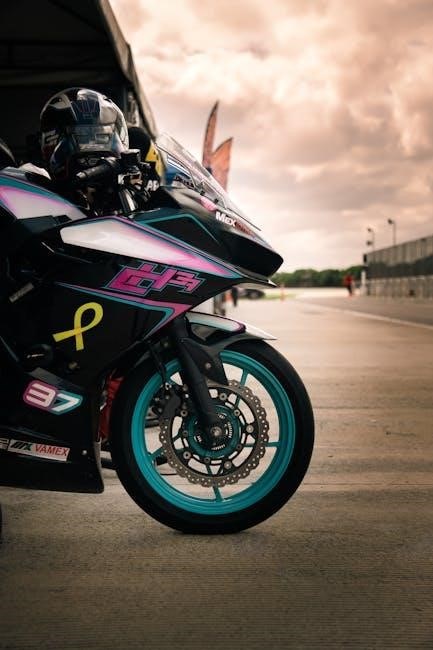
Sizing Charts by Brand
Each brand utilizes unique sizing standards, so consulting their specific charts is vital. Dainese, Alpinestars, and Outlaw Racing all have distinct measurements for optimal fit.
Dainese Suit Size Guide
Dainese offers a comprehensive approach to suit sizing, recognizing the importance of a precise fit for performance and safety. They frequently provide options like “Short” or “Tall” within certain models, such as the Laguna Seca 6, to accommodate varying body proportions more effectively.
Dainese centers uniquely allow customers to try on suits in a riding position, simulating being on a motorcycle saddle. This is invaluable for assessing the fit accurately, as a suit that feels comfortable standing may not be ideal while riding.
Remember to wear your boots, back protector, and gloves during the fitting process to ensure complete integration and freedom of movement. Dainese’s size guides, available on each suit’s dedicated webpage, detail measurements for height, chest, waist, hip, inseam, sleeve, and torso. Always refer to these specific guides for the most accurate sizing information.
Alpinestars Suit Size Guide
Alpinestars, like Dainese, emphasizes the critical nature of proper fit in motorcycle racing suits. While specific details weren’t provided, it’s understood that variations in fit exist not only between brands but also between different models within the same brand. Therefore, relying solely on a general size designation can be misleading.
It’s crucial to meticulously measure yourself – chest, waist, inseam, sleeve length, and torso – and compare those measurements against Alpinestars’ detailed size charts found on their product pages. Remember to account for the addition of a back protector underneath the suit, as this will impact the overall fit.
A little looseness around the butt and waist is generally acceptable, but pay close attention to pad security; pads shouldn’t move freely when standing or riding. Leather will naturally stretch and conform to your body over time, enhancing comfort with use.
Outlaw Racing Suit Size Chart
The Outlaw Strata SP2 suit size chart provides specific measurements in both centimeters and US/Euro sizes, focusing on key body dimensions. These include height, chest, waist, hip, inseam, sleeve length, and torso measurements. This detailed approach aims to assist riders in selecting the most appropriate size for optimal fit and protection.
The chart offers a range of sizes, starting from 10XS and extending to larger sizes, catering to a diverse range of body types. It’s essential to carefully compare your individual measurements against the chart’s specifications, paying attention to both inch and centimeter values for accuracy.
Remember that these charts serve as a guide, and individual fit preferences may vary; Considering the addition of protective gear like a back protector during the fitting process is also vital for ensuring a secure and comfortable experience.
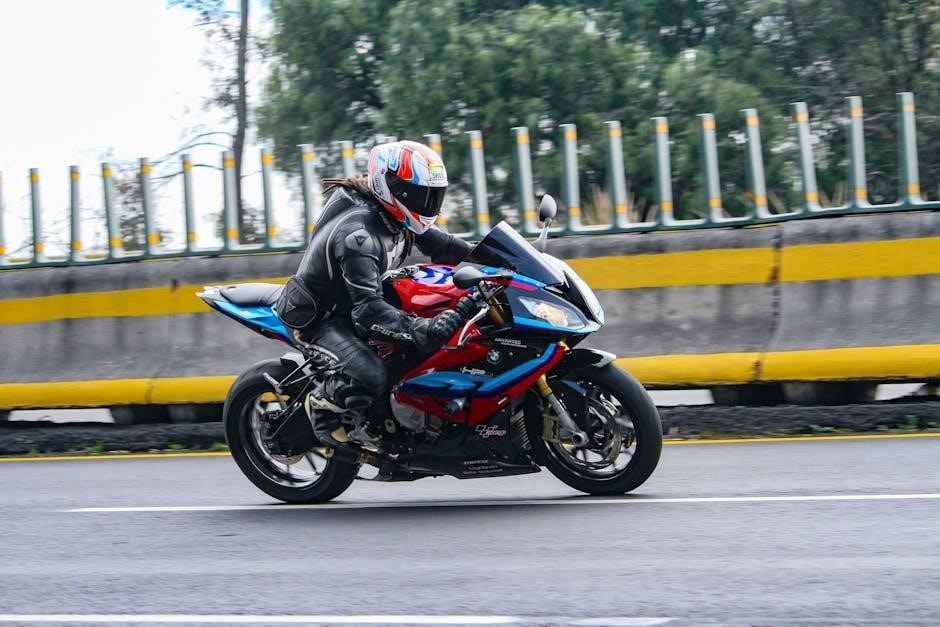
Additional Gear Sizing
Beyond the suit, proper sizing of gloves and boots is essential for complete protection and control. Refer to dedicated size charts for these items, ensuring a snug, secure fit.
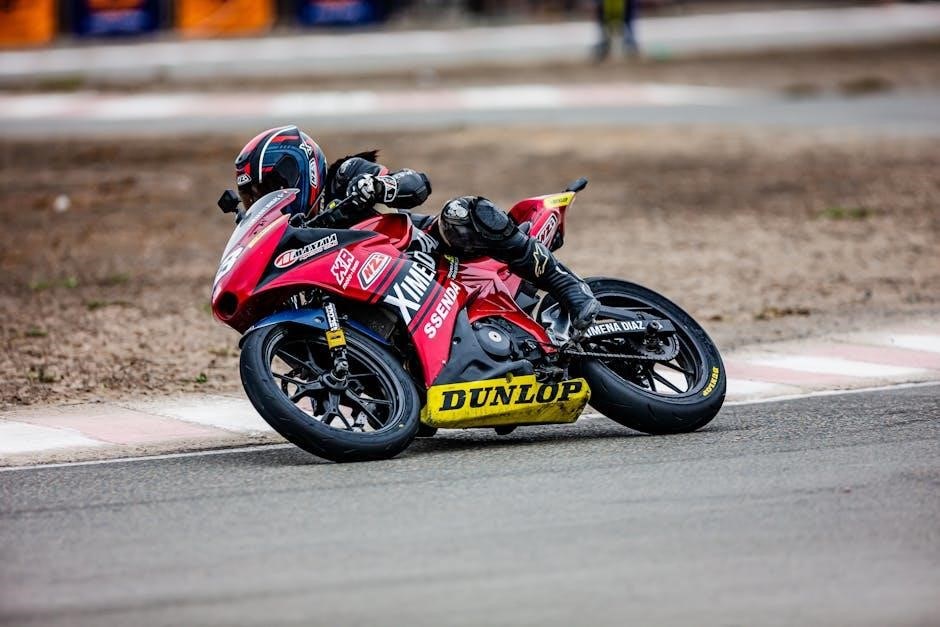
Motorcycle Racing Gloves Size Chart
Finding the correct glove size is paramount for optimal feel and protection. Motorcycle racing gloves are typically sized based on palm circumference, measured around the widest part of your hand, excluding the thumb. Manufacturers often provide size charts correlating palm measurements to glove sizes – commonly ranging from XS to XXXL.

It’s crucial to consult the specific brand’s size chart, as sizing can vary significantly. When measuring, ensure the tape measure is snug but not overly tight. Consider the type of glove; touring gloves may offer a more relaxed fit, while race gloves are designed to be snug and precise.
Always try gloves on with any liners you intend to use. A proper fit allows for full dexterity and control of the motorcycle’s controls, while preventing excessive movement that could compromise protection in a crash. Ill-fitting gloves can lead to discomfort, blisters, and reduced grip.
Motorcycle Racing Boots Size Chart
Properly fitted racing boots are essential for foot and ankle protection during track days and races. Boot sizing typically follows standard shoe sizes, but variations exist between brands and models. Measuring your foot length accurately is the first step; stand on a flat surface with your heel against a wall and measure from the wall to the longest point of your toe.
Consult the manufacturer’s size chart, noting any specific instructions regarding sock thickness. Racing boots should fit snugly, with minimal heel lift, but not so tightly that they restrict circulation or cause discomfort. Always try boots on with the racing socks you’ll be wearing on the track.
Pay attention to the width of the boot, ensuring it accommodates your foot without pinching. A secure fit is vital for maintaining control and preventing injury in the event of a crash. Remember, break-in time may be required for some leather boots.
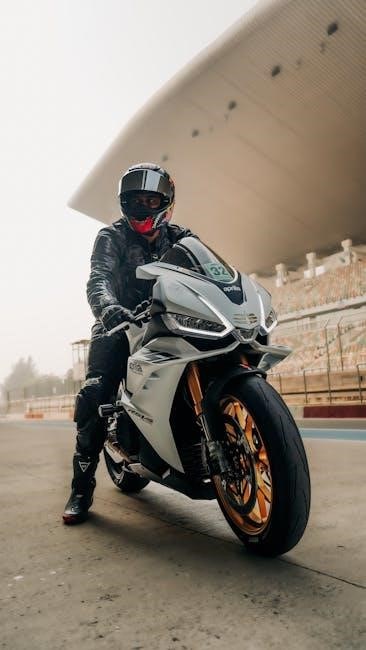
Trying on and Assessing Fit
Evaluate the suit in a riding position, ensuring comfortable movement and secure pad placement. Remember leather stretches with use, improving the overall fit over time.
Riding Position Fit Check
Simulating a riding position is paramount when assessing a motorcycle racing suit’s fit. Dainese centers even offer the ability to try suits on while seated on a motorcycle, replicating real-world conditions. When in the riding stance, the suit should feel snug but not restrictive, allowing for a full range of motion.
Pay close attention to how the suit feels around your neck, groin, and back. Some movement of pads when standing is acceptable, but they should lock into place and remain secure once you adopt a tucked riding posture. A little looseness around the butt and waist is generally okay, but avoid excessive slack. Remember to account for the added bulk of a back protector when evaluating the fit, as this can significantly impact comfort and security.
Pad Security and Movement
Ensuring the security of protective padding is a critical aspect of motorcycle racing suit fit. It’s common for pads to exhibit some movement when standing upright, particularly around the neck and groin areas. However, this movement should cease entirely when you assume a proper riding position.
The pads must lock into place, providing consistent and reliable protection during a crash. If pads are easily pulled down or shifted significantly, the suit is likely too large or improperly fitted. Remember that even slight pad displacement can compromise safety. Prioritize a snug, secure fit that keeps all protective elements firmly in position throughout your ride. This is a key indicator of a well-fitted, protective racing suit.
Leather Stretch and Break-In
Understanding leather’s natural properties is vital when assessing a racing suit’s fit. High-quality leather will inevitably stretch and conform to your body over time with use. This break-in period is normal and contributes to a more comfortable and personalized fit.
However, it’s crucial not to rely on excessive stretching to achieve a proper fit initially. The suit should feel snug but not restrictive even before break-in. A little looseness around the butt and waist is acceptable, anticipating some leather give. Dainese centers even offer riding position fit checks to simulate this. Remember, the suit will become more comfortable as you ride, but starting with a reasonably accurate size is paramount for safety and performance.